Stacks/Retail operations
Walmart's nightly multi-agent inventory forecasting for 4,700 stores
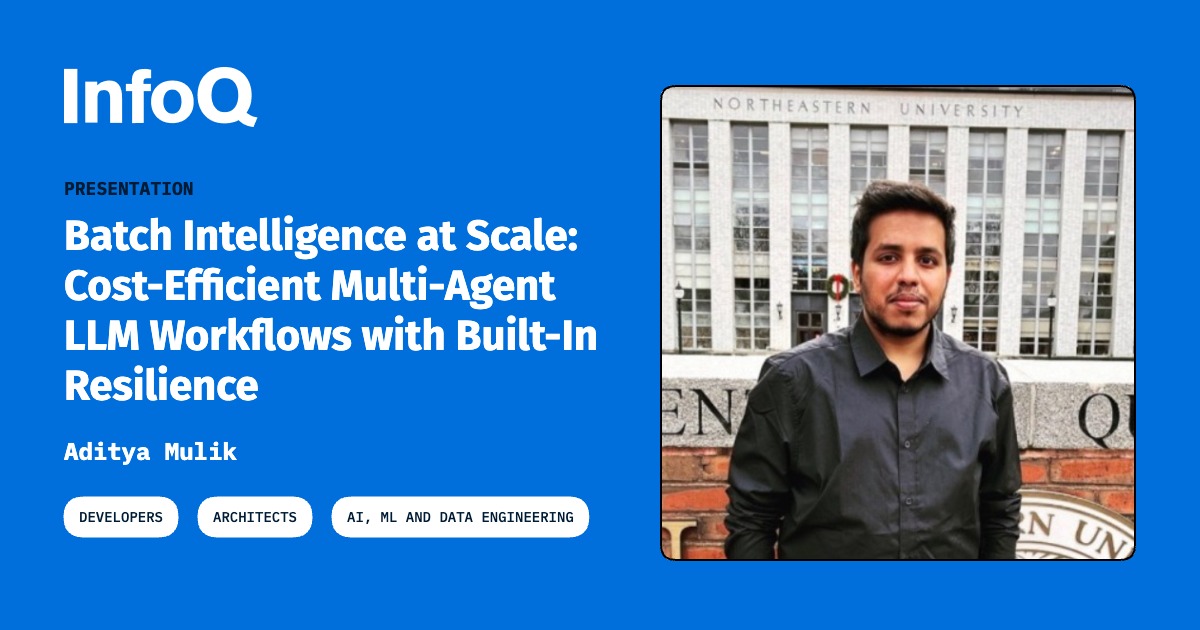
Walmart Global Tech senior engineer Aditya Mulik walks through the multi-agent LLM workflow that produces nightly inventory recommendations for about 4,700 US stores. Data gathering, synthesis and grounding agents run in sequence, pull live data over MCP, enforce structured outputs, and retry with bounded loops; store managers approve or override each recommendation. The pilot on 10 to 15 stores looked great, then production surfaced schema violations, cross-department data mismatches and network drops. Switching the same model and tokens from 400 reserved PTUs to pay-as-you-go cut inference from about $100k to $120k a month to about $10k. Talk published by InfoQ.

- Use case
- Nightly batch inventory recommendations for Walmart's roughly 4,700 US stores: agents combine real-time data with forecasting model output into a clear directive for each store manager (for example, increase apple stock 15% in produce ahead of the weekend), and the manager reviews, agrees or overrides.
- Category
- Retail operations
- Orchestrator / framework
- A sequential multi-agent workflow rather than a monolith, with sub-agents for data gathering, synthesis and grounding, run as a nightly batch. Loop agents with bounded retries (max iterations) re-run on schema violations or failed tool calls, and structured outputs are enforced. Inference moved from 400 reserved PTUs to pay-as-you-go, accepting rate limits and latency inside the overnight window.
- Memory
- MCP lets agents pull live data sources during reasoning, grounding recommendations in real-time store data alongside forecasting model data.
- Evals
- Not part of the initial MVP. Department-specific eval sets (for example around shelf life) plus grounding and governance checks (such as keeping pricing information out) were added iteratively after launch.
- Observability
- Custom logs for schema mismatches, failed tool responses, DB reads and writes, and latency across the whole workflow. Started on the cloud vendor's dashboards, then built custom dashboards.
- Cost (stated in writeup)
- about $10k a month in inference (down from about $100k to $120k a month on 400 PTUs) · monthly
- Reliability (as stated)
- 99%Target
Workflow success rate target · The 97% and 2.3% figures that follow in the talk were described as examples on a slide, not measurements, so they are not recorded.
“We were trying to reach a success rate of 99%” Source
As stated in the source, checked 2026-11-28. Never a WhatWeRun estimate. Eval, benchmark, and target figures are not production results.
- Source
- https://www.infoq.com/presentations/scaling-multi-agent-llm-batch/
Aditya Mulik (Walmart Global Tech) · Published Nov 10, 2026 · Last verified Nov 28, 2026
Related
More like this
 infoq.com
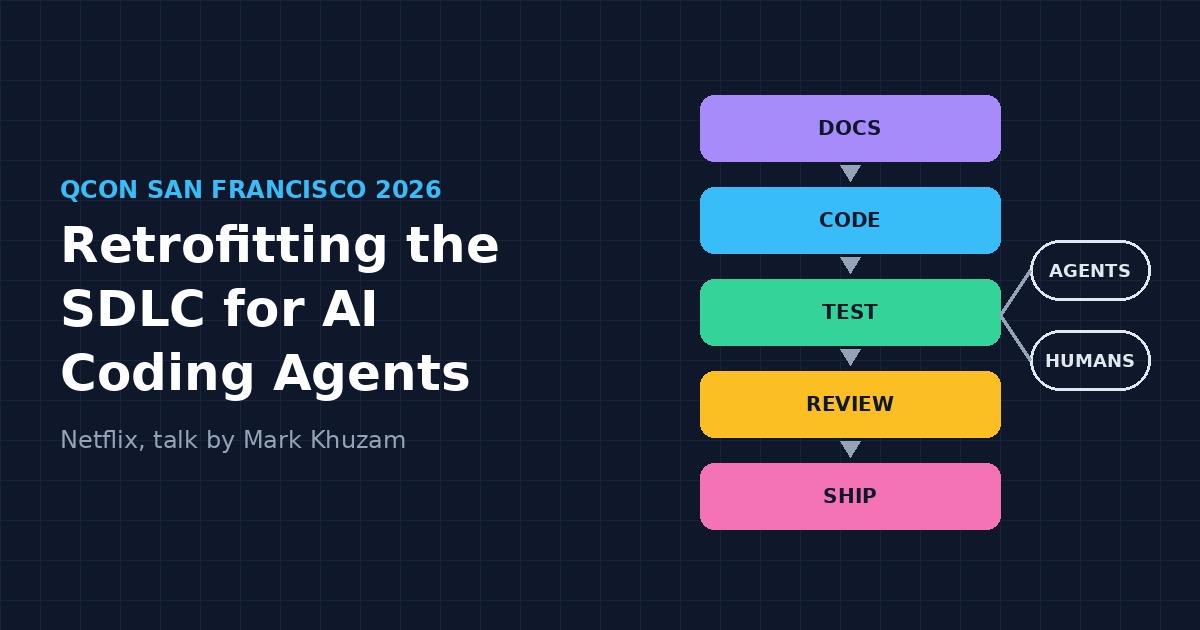
Netflix Commerce's SDLC retrofit for AI coding agents
Netflix's Commerce team (server-driven UI behind one screen-composition service for iOS, Android, web and TV, plus Tier 0 services) set up its codebase, docs and CI so coding agents and engineers ship together: test migrations, feature work from screen to data to route to test, and pre-review of every pull request.
 aws.amazon.com
BMW Group R&D agent fleet governance
Building, governing, and operating hundreds of agents across BMW R&D software development (12,500+ developers, about 500 million lines of vehicle code, 1,300+ Connected Vehicle microservices), including PR review and requirements-to-deployment flows.
 aws.amazon.com
Duco's multi-tenant reconciliation agents on Bedrock AgentCore
Agents for regulated financial data operations: onboarding new reconciliation processes (parsing legacy configs, file formats, and spreadsheet macros into Duco processes) and first-mile investigation of reconciliation exceptions, with an analyst making the final call.